
Last updated November 15, 2026
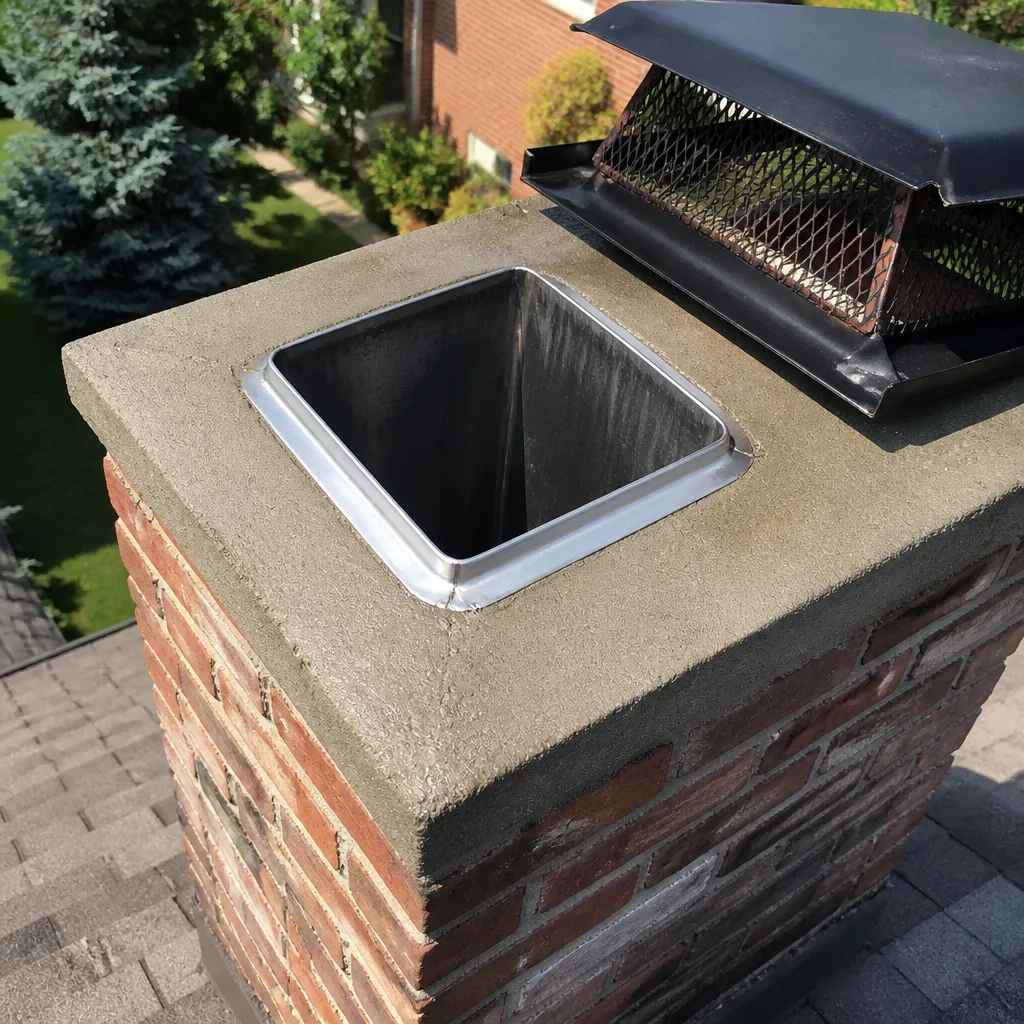 Sweep & inspection
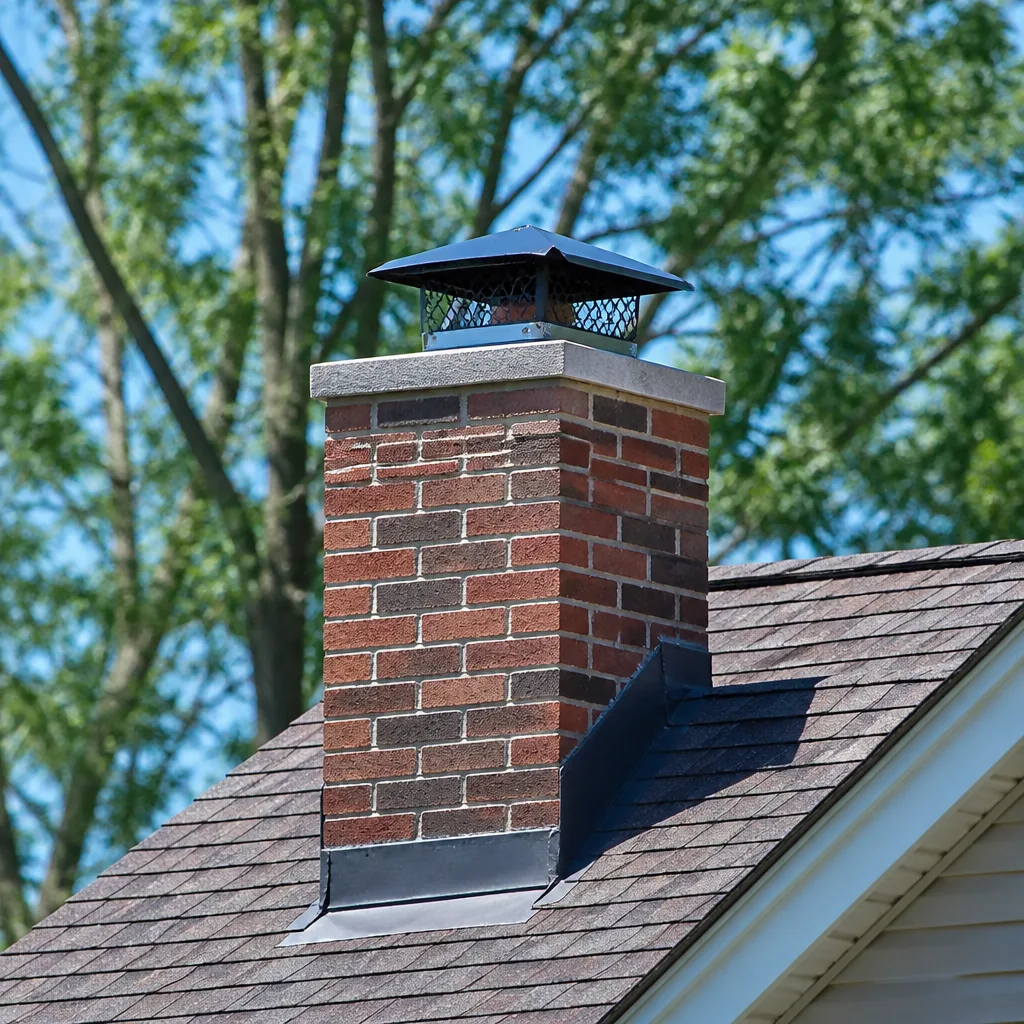 Caps & crowns
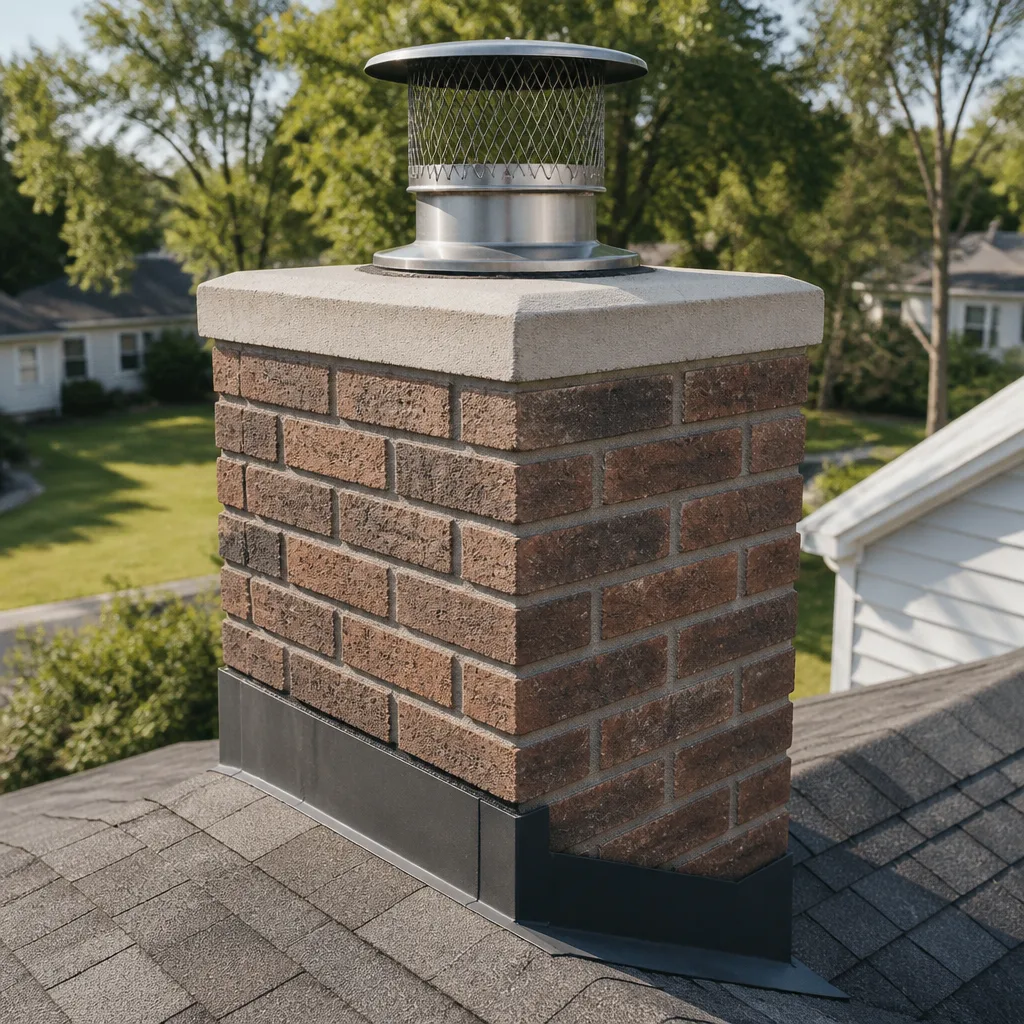 Flue relining
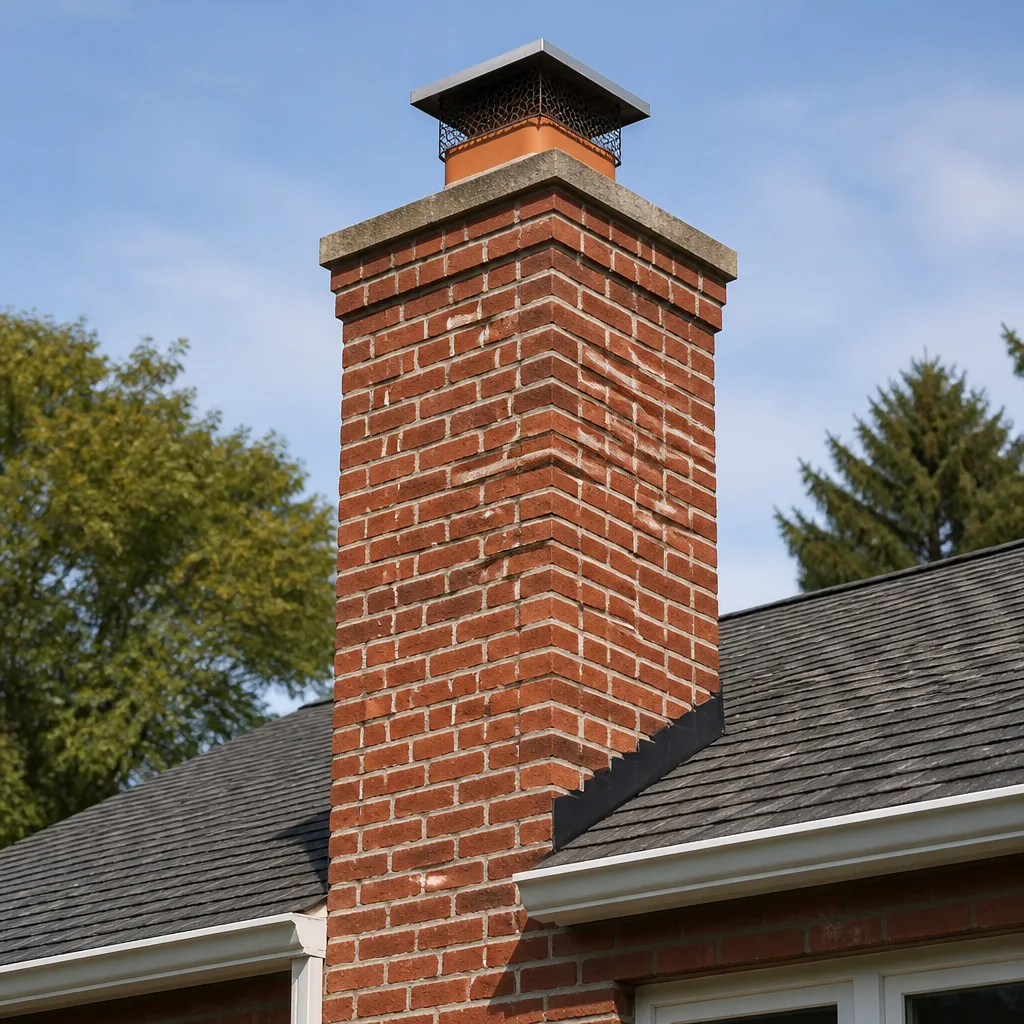 Masonry repair
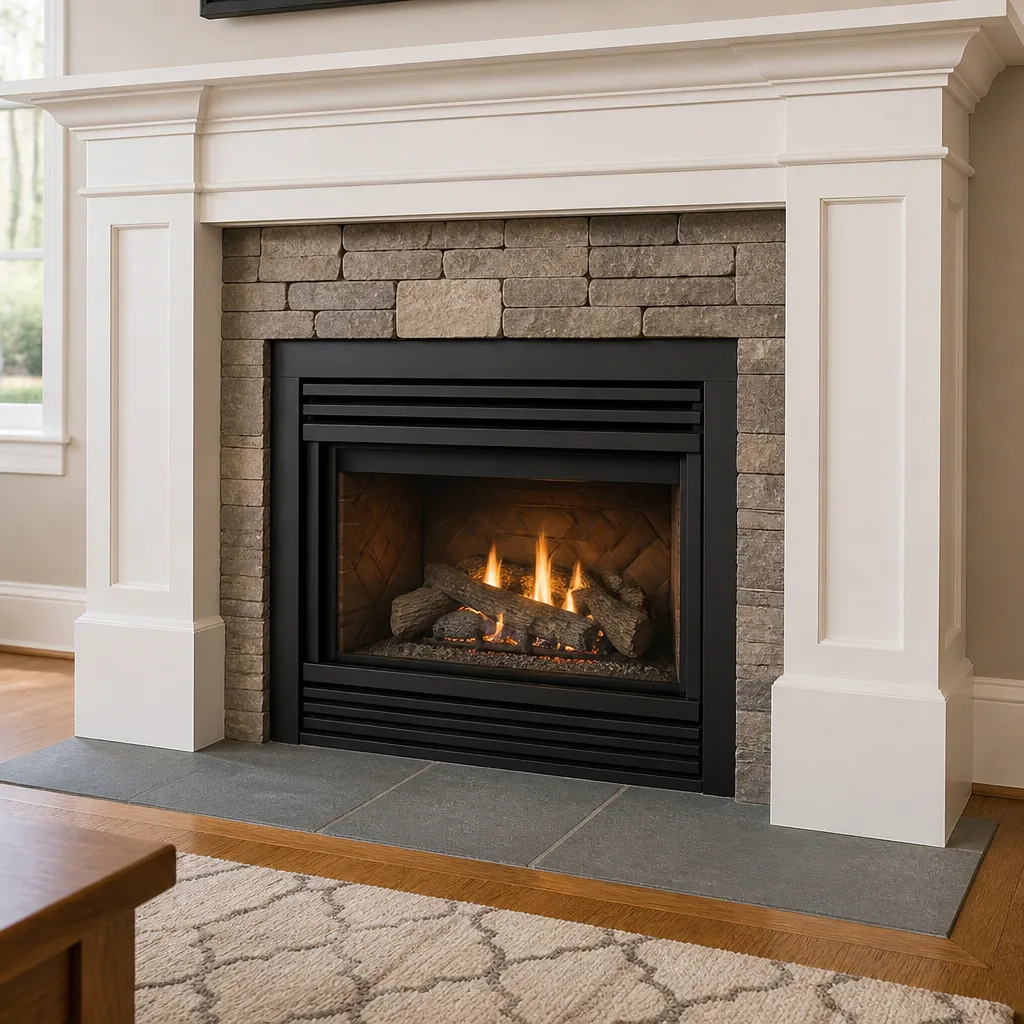 Gas fireplace service
Level 1 sweep and inspection to the NFPA 211 annual standard - flue, crown, cap, and flashing checked and photographed
Chimney sweep logs do not sweep chimneys. They loosen some creosote - which then falls where a brush and vacuum still have to collect it.
The Complete Guide to Chimney Cleaning in Lubbock
Most chimney fires don’t start from neglect. They start from homeowners who thought they were being responsible, but who followed advice written for the Pacific Northwest, not the Texas Panhandle. A homeowner who sweeps every fall, burns good wood, and keeps the cap on can still end up with a glazed creosote problem if the guidance they trusted assumed damp coastal winters and oak. Lubbock doesn’t work that way. Our wood is different, our wind is different, and our fireplaces get used in a rhythm that most national guides never account for. This guide maps the whole cleaning process to how chimneys in Lubbock actually behave.
Quick Answer
Chimney cleaning in Lubbock should happen once a year for a fireplace you burn regularly, and inspection should happen whether you burn or not, because Panhandle dust settles in flues even in fireplaces that sit unused. A proper service pairs the sweep with an inspection, so the flue, damper, smoke shelf, and firebox all get checked at the same visit. That combined service is what catches a liner problem before it becomes a repair.
Styles & brands we work with
- Sweep & inspection
- Caps & crowns
- Flue relining
- Masonry repair
- Gas fireplace service
Table of Contents
- Why Chimney Cleaning in Lubbock Isn’t Like the Guides Say
- Mesquite, Cedar, and Why Your Wood Changes Your Creosote
- What Dust Storms Leave Inside an Unused Fireplace
- Level 1, Level 2, and Level 3 Inspections Explained
- Cleaning vs. Cleaning-Plus-Inspection
- What Actually Happens During a Sweep
- The Parts Behind the Flue: Damper, Smoke Shelf, Firebox
- Repair, Relining, and the Dryer Vent Most Chimney Services Skip
Why Chimney Cleaning in Lubbock Isn’t Like the Guides Say
The advice that dominates the internet about chimney maintenance gets written by people in wetter, colder parts of the country. That advice assumes certain things: that you’ll burn your fireplace hard from November to March, that your wood comes from hardwood forests, that moisture is the enemy to watch for. Some of that transfers to the Texas Panhandle. A lot of it doesn’t.
Here’s what the generic advice misses. The water in this part of Texas runs alkaline, and alkaline water has a way of finding its way into a chimney system through small roof leaks, condensation around the cap, and the top of the flue, where it can react with the masonry over time. Alkaline conditions and clay flue tile don’t get along particularly well. That doesn’t mean the roof is failing. It means the top of the chimney is worth a good look every year, which is a detail a Portland climbing guide never mentions.
Wind matters too. Lubbock sits right in the path of wind events that carry enough grit and dust to coat surfaces, and that grit is part of why we treat inspection as its own priority, separate from the sweep. A fireplace that went unused through last spring’s wind and this summer’s dust can still have a flue that needs attention before you ever light a match.
There’s a rhythm here too. Fireplace use in Lubbock runs late into the year compared to the north. Some years the first real cold snaps don’t arrive until December, and folks keep a fire going through January and February. That compresses the burn season, which means homeowners get more use out of fewer months, which concentrates creosote buildup into a shorter period. If your mental model of the season came from a northern guide, you may be underestimating how much creosote you’re generating in a shorter window.
None of that makes Lubbock chimneys dangerous. It makes them specific, and specific is what we plan for. Read the guide with that in mind: the number one clean and inspect once a year still holds, but what we look for and what we find are different here than they’d be in a wet, cold, hardwood climate.
Mesquite, Cedar, and Why Your Wood Changes Your Creosote
The wood you burn determines how fast and how thick creosote builds up, and this is where Lubbock homeowners get caught off guard. The East Coast guide assumes oak and maple, well-seasoned, from a wood lot. West Texas wood is different. Mesquite is everywhere, cedar is cheap and available, and both burn hotter and dirtier than oak in ways that affect creosote accumulation.
Why does that matter for cleaning frequency? Wood type affects creosote chemistry. Resinous woods like cedar, and dense hardwoods like mesquite with their own tight resin structure, tend to deposit creosote faster than a comparable volume of seasoned oak. That’s not a knock on the wood, it’s just a fact you plan around. If you burn a cord of cedar and a cord of seasoned oak in the same season, your flue will not look the same. The cedar load deposits more, and depending on your draft and your burn habits, that deposit can go from flaky to glazed faster than national charts suggest.
Glazed creosote is the kind that’s hardest to remove and most associated with chimney fires. It’s dense, shiny, and doesn’t brush off cleanly. When a chimney has glazed creosote, the standard sweep doesn’t get it. Relief comes from a chemical treatment followed by a proper resweep later, and that affects the cost and schedule of the job. In our experience, that escalation happens faster in Lubbock on a mesquite-and-cedar diet than in a place where everyone burns oak.
A few practical habits that keep creosote in check:
- Season your wood. Green wood smolders, and smoldering wood produces more creosote than a hot burn.
- Burn hot. A cool, smoldering fire is a creosote factory. Let the fire breathe.
- Mix your loads. If you burn a lot of cedar, work in some seasoned hardwood so you’re not stacking resin on resin for a whole season.
- Inspect on schedule. If you burn heavy on mesquite or cedar, a yearly inspection isn’t optional. It’s the feedback loop that tells you how your specific burning pattern is affecting your flue.
The wood-bin rule here is simple: know what you burned, know how much, and use that as the reason to look inside the flue every year, not just to assume the standard northern advice covers you.
What Dust Storms Leave Inside an Unused Fireplace
Here’s the part that catches people most often: Lubbock dust settles inside chimneys that have never had a fire lit in them. Homeowners assume an unused fireplace is a perfectly clean fireplace. It’s not. Dust storms, wind-damaged caps, and the general particulate in the air here push fine grit through the cap, down the flue, and into the firebox over months and years. A fireplace with a hundred fires in it and a fireplace that’s been dark for two years can both need a sweep.
That reframes the inspection question. Most homeowners think of the annual chimney inspection as a safety check tied to burning. It’s not only that. It’s a structural check on a system that lives under the sky, and the sky over Lubbock is a windy one. Dust buildup in the flue can narrow the passage, coat the smoke shelf, and contribute to poor draft even if you never put a match to it. Dust in unused fireplaces also affects the damper, which can seize up from grit building up around its edges.
If your Lubbock home has a fireplace you haven’t used in more than a year, the honest answer is that a Level 1 inspection matters, and here’s why: an unused fireplace is a chimney nobody has looked at, and the outside of a fireplace tells you nothing about what’s happening inside the flue. The check is quick and worth doing even when there’s no fire in your immediate plans.
A dry-dust problem doesn’t usually require more than a sweep and a Level 1 inspection. What matters is finding out. When the cap, crown, or top of the flue is compromised and letting grit through, that’s a repair conversation, not a cleaning one, and it’s a lot easier to have that conversation at a maintenance visit than after a problem has spread. Many homeowners pair the annual Chimney Sweep Lubbock visit with a walk-around of the exterior for exactly this reason.
Level 1, Level 2, and Level 3 Inspections Explained
Not all inspections are the same, and knowing the difference tells you which one your Lubbock home needs. The three levels are industry-standard categories, and the choice between them is usually determined by three things: whether the chimney has changed, whether it’s changed hands, and whether a problem has been found.
- Level 1 inspection. The basic annual check. We access the fireplace, look up the flue with the right tools, and examine the accessible parts of the chimney: firebox, damper, smoke shelf, flue walls, and the top of the flue from outside where possible. This is what a chimney that’s been in regular use, with no known problem, gets once a year. A Level 1 inspection is included with a cleaning at no extra step because we’re already there.
- Level 2 inspection. A more thorough look, included when the chimney has had any change in circumstances. Real estate transaction, a new appliance connected, a chimney fire (known or suspected), a remodel, an earthquake, or a severe weather event. Level 2 inspection includes the Level 1 scope and adds access to hard-to-reach areas, typically with a camera inspection of the flue. This is the level Lubbock homes most often need after a storm season that’s compromised a cap, or after the home changes hands.
- Level 3 inspection. The most involved. Reserved for when a specific problem has already been identified and assessing it requires access that isn’t available without removing a component of the chimney or the surrounding structure. Level 3 inspection is not a routine annual service. It’s used to diagnose something specific and it follows the finding, not the calendar.
For a Lubbock home with an active fireplace and no known issues, a Level 1 inspection is the appropriate annual check. After a storm season where the cap took damage, after a chimney fire, or before you buy a home with a fireplace, the Level 2 is what a thorough technician will recommend. Camera inspection is included in that level, and seeing the flue on camera is how you know what’s actually going on inside the chimney rather than guessing.
The question to ask isn’t “which level is best?” The question is “what’s changed since the last inspection?” If nothing has changed, Level 1. If something has, Level 2. Our technician will tell you which one is appropriate before work starts.
Cleaning vs. Cleaning-Plus-Inspection
Two different jobs, and one combination that costs less over a year than they do apart. A chimney cleaning is the sweep. It removes soot, dust, and creosote from the flue and firebox. An inspection is the assessment. It’s the check on structural components and liner condition and it produces a record of what the system looks like at that moment.
Some homeowners book a sweep and skip the inspection to save on the second visit. That’s understandable, but it misses the part of the visit that finds future cost. Cleaning is what removes the fuel; inspection is what tells you whether the flue, damper, and firebox that contains the fuel are in shape to keep it safely. Both are answering different questions. When they’re done together, only the setup happens once, the fireplace gets opened once, and you get a single coherent report covering both the condition of the flue and the state of the structural components. The combined visit is also cheaper than two visits, because you’re not paying for the setup and travel of two trips.
What a cleaning-plus-inspection visit includes:
- An estimate before any work begins. The price is set by a written estimate agreed before the technician starts.
- A camera inspection of the flue. You see what the technician sees. This is the foundation of every recommendation that follows.
- The sweep itself. Soot and creosote removed from the flue, plus a cleanout of the firebox and smoke shelf.
- An inspection on the structural side. Damper, firebox, chimney cap, crown, and exterior.
- A written record. The report becomes the baseline for the next annual visit.
We encourage homeowners in Lubbock to combine them. A chimney sweep at chimney sweep time is the natural moment to run an inspection, because that’s the one time a year a fireplace gets opened up anyway.
What Actually Happens During a Sweep
Homeowners want to know what happens in their house. Here’s the full sequence, start to finish, so nothing comes as a surprise.
Before the technician arrives, clear the floor around the fireplace and move anything fragile off the hearth. Move pets and small children to another room, and know where the drop cloths are going to go. If you have a fireplace insert or a gas log set, mention it when you book so the right tools come out.
- Setup. Drop cloths on the floor, and a sealed containment system so the cleaning happens without dust migrating into the room. A proper sweep contains everything; you shouldn’t see soot drift after the technician finishes.
- Pre-sweep inspection. A chimney isn’t cleaned blind. The technician starts by inspecting the flue and structural components before deciding on the best approach. A flue with heavy glazed creosote gets a different treatment from one with light, flaky creosote.
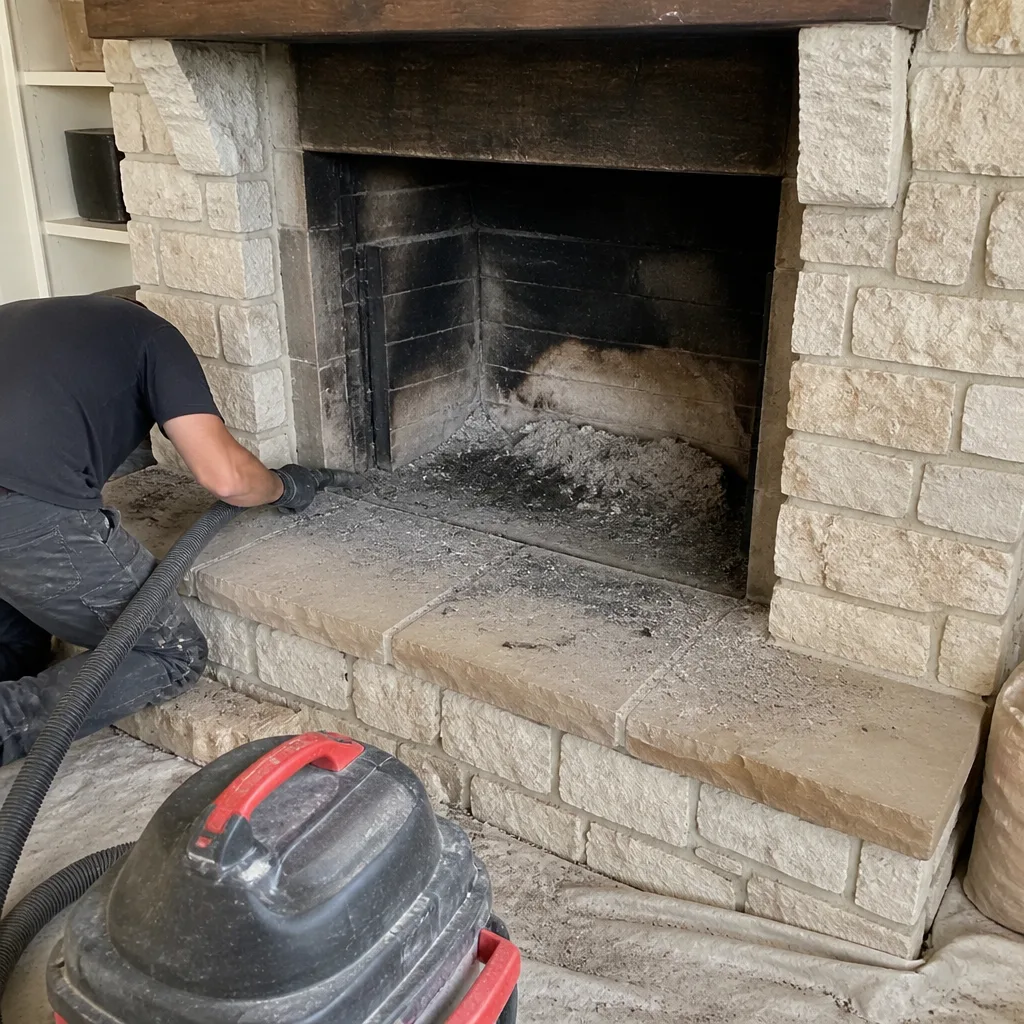
- Flue brush and vacuum. The flue gets brushed with the correct size and type of brush, and a high-powered vacuum runs throughout so dislodged soot has nowhere to go but out.
- Firebox and smoke shelf. The area above the damper and behind the firebox gets cleared of buildup. This is a part of the chimney that catches debris quietly and it’s where a partial cleaning becomes obvious.
- Camera inspection. The flue is looked at on camera and the footage becomes part of the report. This is where structural problems or liner deterioration show up before they’re an emergency.
- Cleanup and walk-through. The containment comes down, the floor underneath is clean, and the technician walks through the findings and any recommended next steps before leaving.
The whole visit for a typical fireplace takes about an hour to an hour and a half, longer if there’s significant glazed creosote or a repair to assess.
The Parts Behind the Flue: Damper, Smoke Shelf, Firebox
The flue gets the attention because it’s where the fire goes up, but the parts around it do their own work, and the sweep is where they get checked. These aren’t decorations. They’re the pieces that determine whether smoke goes up the chimney or into the room, and whether the structure around the fire stays intact.
The damper. The metal plate above the firebox. It’s what closes the chimney when not in use and opens it when you burn. Grit from Lubbock dust builds up around the damper hinge over time and it can seize up or stop sealing. A seized damper is a draft problem on both ends: open when it shouldn’t be, and it’s a cold-air leak into the room; closed when it should be open, and smoke backs into the living room. A good sweep includes a damper check and lubrication.
The smoke shelf. The small ledge just above the damper. It’s what directs smoke back up the flue when it enters the chimney, a wind-direction correction that helps prevent downdrafts. The smoke shelf collects soot and debris quietly and is a common hidden pocket that a sweep without proper inspection misses. In Lubbock, where dust is an ever-present factor, the smoke shelf gets loaded faster than people expect.
The firebox. The masonry or steel chamber where the fire sits. The firebox is where heat meets structure. Cracks in a firebox, particularly in the mortar joints, allow heat to reach the surrounding framing over time. A sweep should include a firebox check for cracks, damaged mortar joints, and, in steel fireboxes, warpage. A hairline crack may be cosmetic. A wider one is a repair before the next fire.
When the damper, smoke shelf, and firebox are all checked alongside the flue, the cleaning covers the whole system rather than just the pipe. If the sweep turns up a problem, we can address it, because chimney repair is part of what we do. Materials like HeatShield and Gelco are professional-grade and used specifically in repairs.
Repair, Relining, and the Dryer Vent Most Chimney Services Skip
A sweep that finds a liner problem has to hand off to a repair, and that’s where most chimney-only companies end and the homeowner’s phone calls begin. We handle the repair, and we use the trade-trusted brands that the industry has vouched for rather than the cheapest off-brand substitute.
If the flue liner has deteriorated but isn’t fully gone, HeatShield can often be applied to restore the surface rather than replace the liner. That’s a cost-saving option when the liner is restorable, and not every company knows how to do it. When the liner needs full replacement, we install DuraFlex liner systems. Both are professional-grade and what a technician should be installing on a system that carries fire.
What’s often forgotten: the clothes dryer. Dryer vent lint buildup is a fire hazard most chimney-only companies don’t touch, but the vent behaves like the chimney in one important way. The lint inside a dryer vent is a fuel source, and the vent is a passage where heat travels up and out. When lint collects over months of use, it can catch fire in the vent or in the dryer itself. Our dryer vent cleaning service addresses that hazard with the same range of trade-trusted materials we use in chimney work, including Famco product expertise for dryer vent systems.
Why combine the two? Because the same technician visits once and looks at both, and the same company handles both the fix and the vent. That’s cheaper and simpler than calling a chimney company and a separate vent cleaner on different days of the week. When you book an annual Lubbock visit for chimney sweep service, adding dryer vent cleaning covers the two biggest household vent hazards in one visit.
Common Mistakes to Avoid
- Assuming a sweep every year is enough without inspection. A sweep without inspection removes buildup but leaves structural problems unknown. The inspection is what catches the crack, the seized damper, or the liner that’s thinning before it becomes a bigger job. In Lubbock, where dust and wind are constants, the inspection catches more than a sweep alone will.
- Burning green or unseasoned wood to save money. Green wood burns cool and smolders, and smoldering produces more creosote. If your goal is to burn through some wood you got a deal on, mix it with dry seasoned wood and burn hot. Otherwise the savings go straight up the chimney.
- Burning heavy loads of cedar or mesquite all season without a mid-season look. Both woods burn hotter and deposit resin faster than oak. If you’re heavy on either, have the flue checked at the midpoint of the season if you can, or at minimum don’t push past a year without inspection.
- Thinking an unused fireplace doesn’t need inspection. Dust storms are the number one reason. If your fireplace has sat for a year, the flue is likely dusty and the damper may be seizing. One annual Level 1 inspection handles this.
- Ignoring the cap and crown. The cap is what keeps out rain, grit, and birds. When the cap or crown is damaged, everything inside the flue is compromised. A repair at the top beats a repair at the bottom.
- Skipping the dryer vent on the same visit. Chimney-only companies miss it because it’s not their line of work. If you’re already paying for a technician visit, adding a dryer vent check addresses a fire hazard most homeowners don’t think about at all.
- Letting an unused-but-open damper go unchecked. An open, unsealed damper in a Lubbock winter is a draft that runs cold air into the room through the fireplace. A simple damper check on the same visit fixes it.
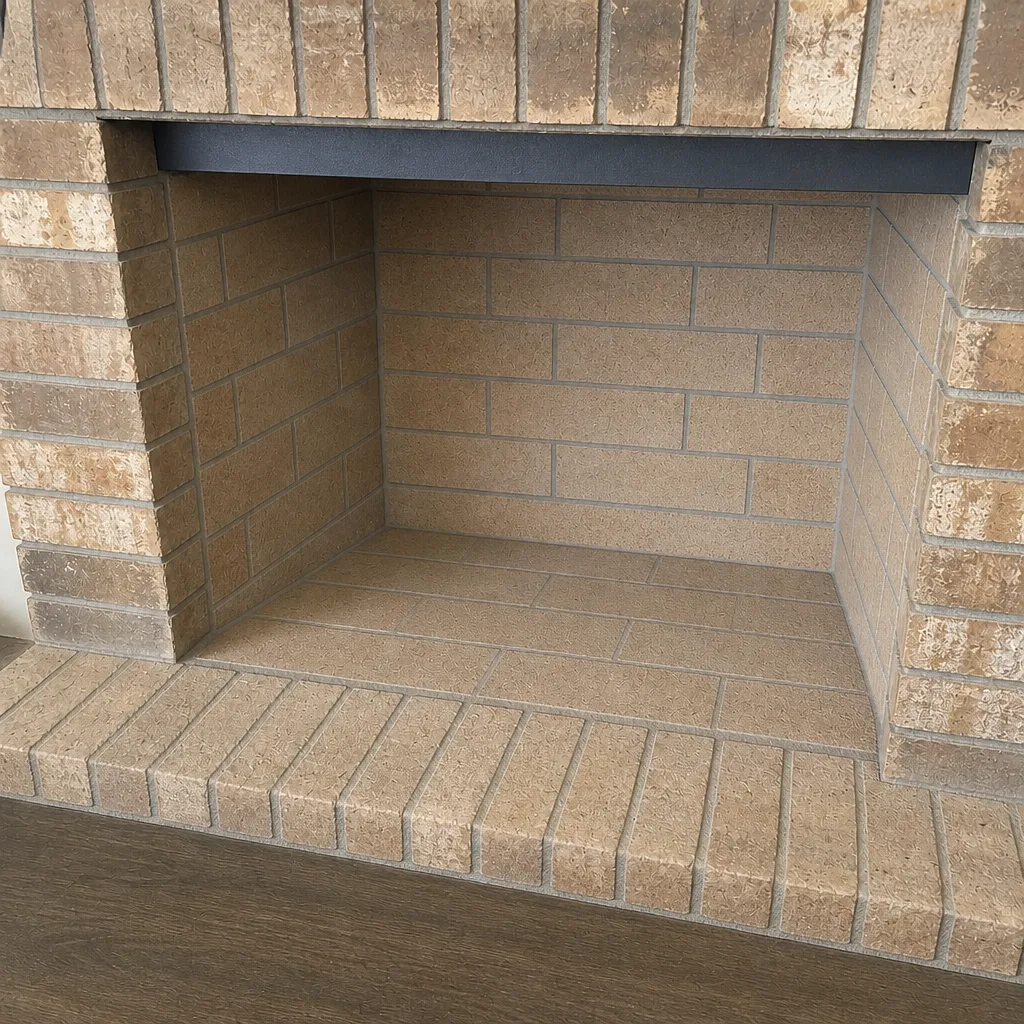
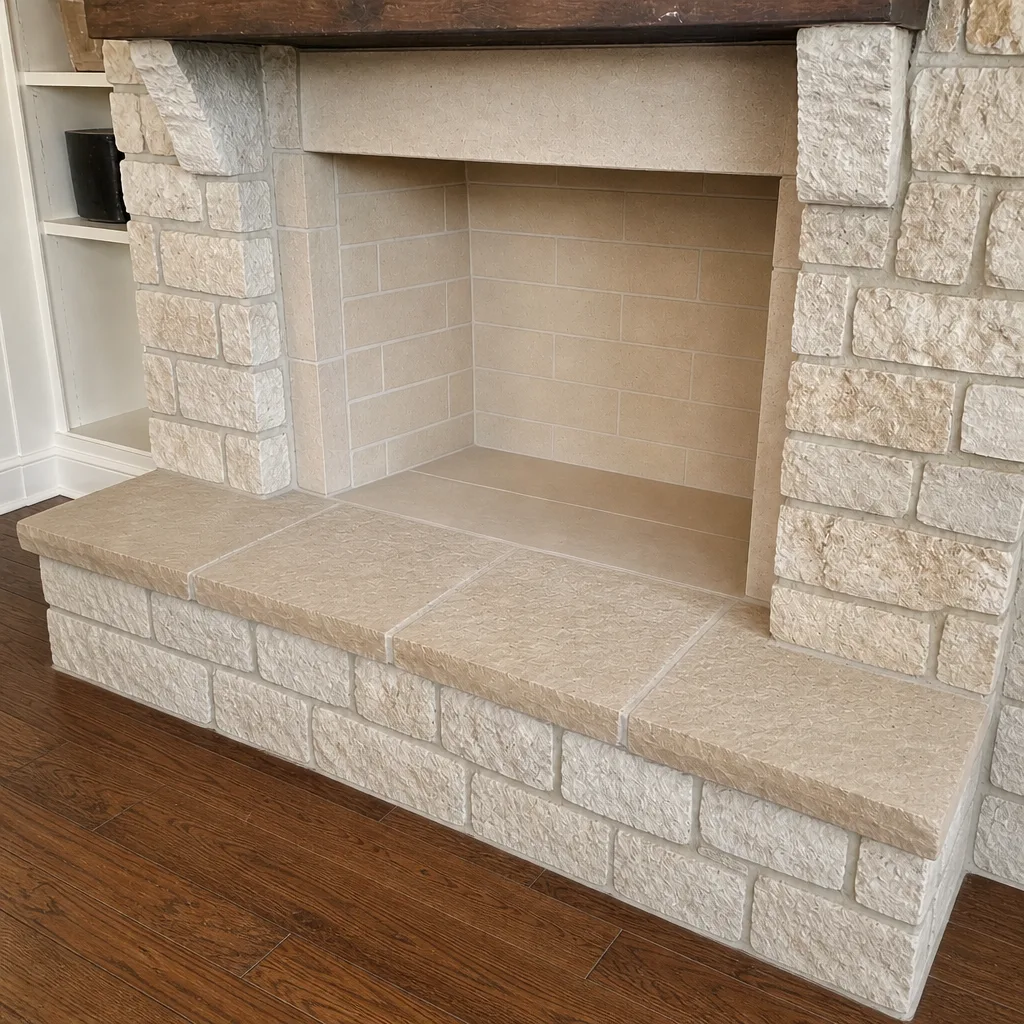
See the difference
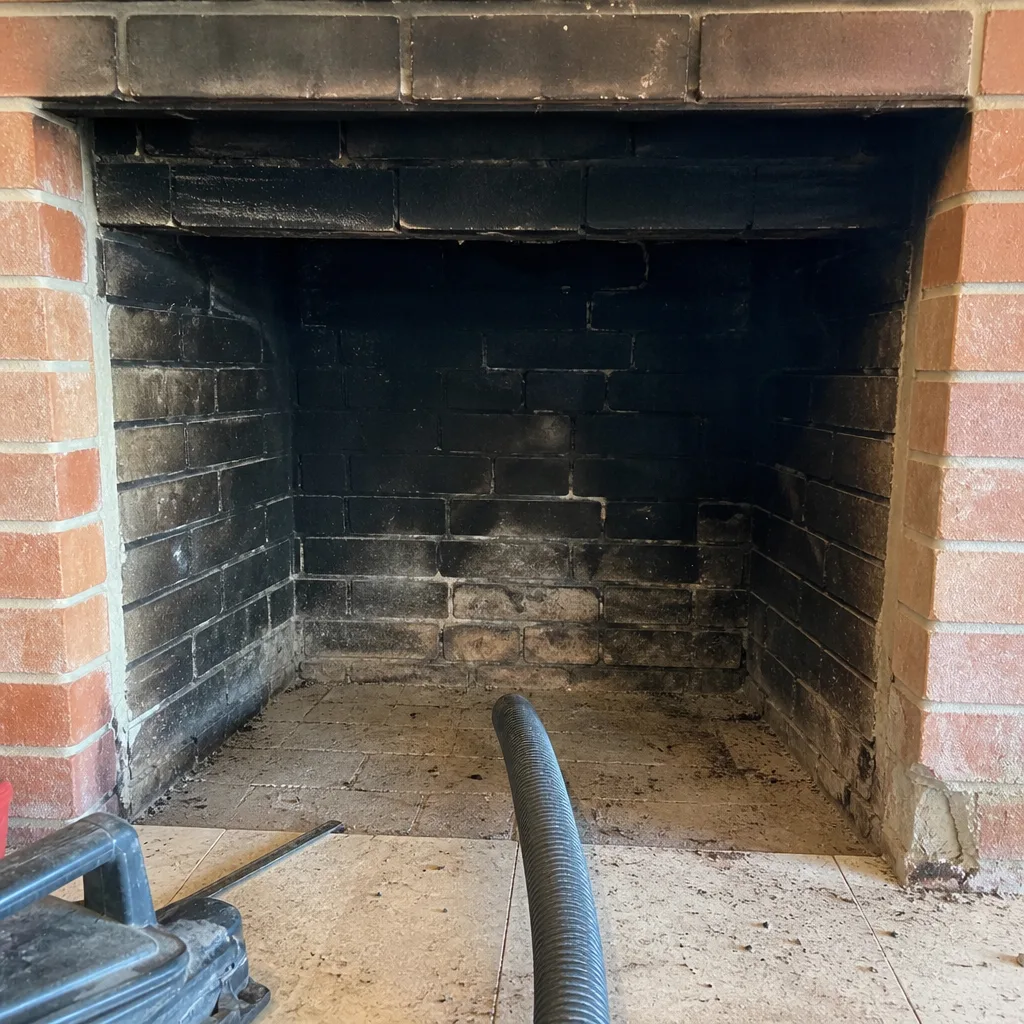 Before
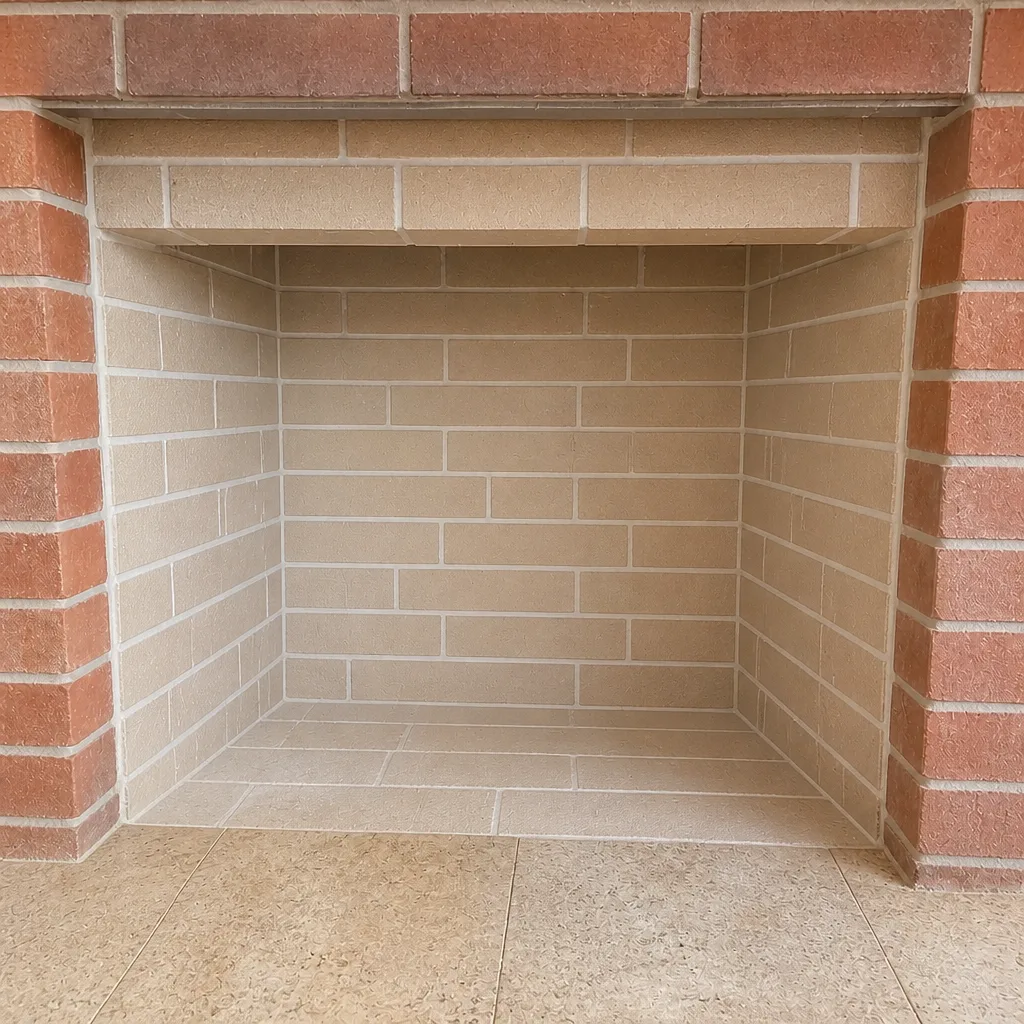 After
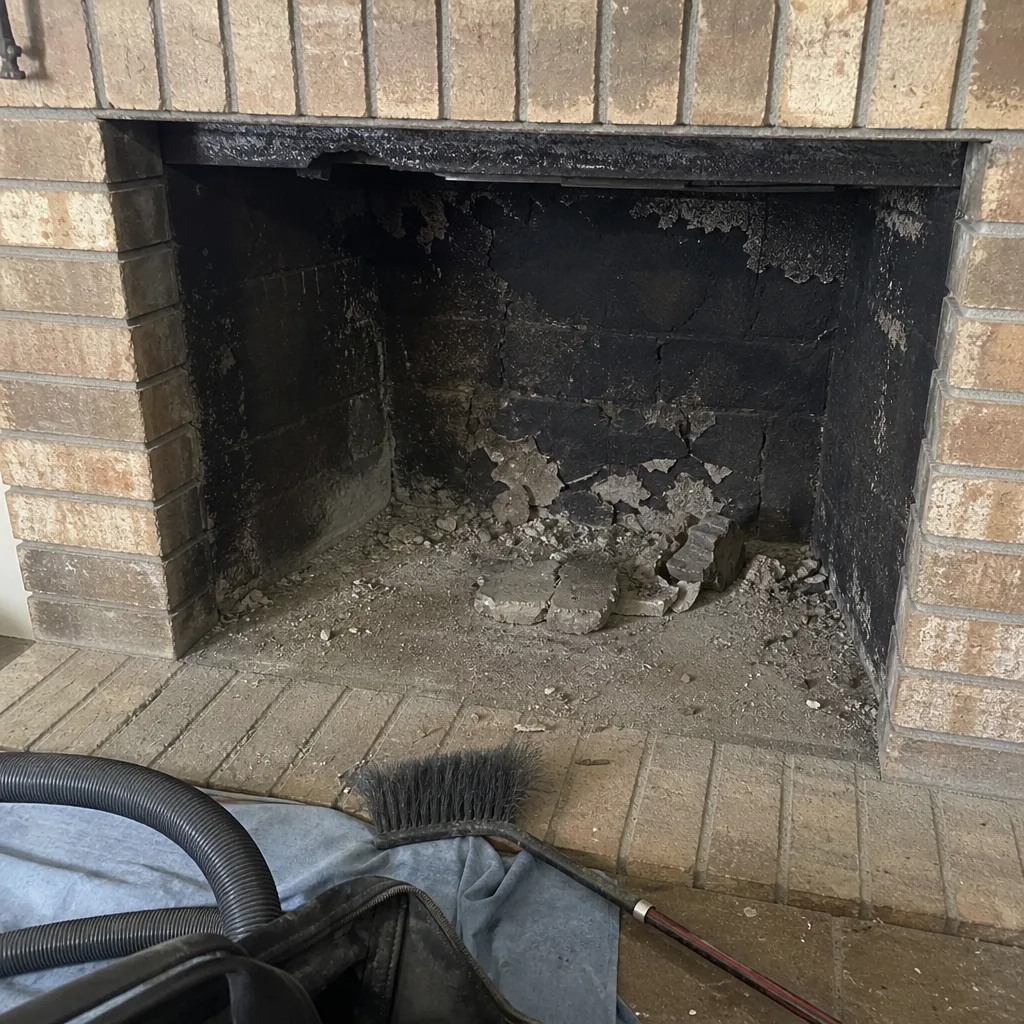 Before
 After
 Before
 After
When to Call a Professional
Call a professional if you’ve used your fireplace for a full season and haven’t had it cleaned. Call if a chimney fire happened, or if you suspect one, and you haven’t had a Level 2 inspection since. Call if you see cracked masonry in the firebox, a damaged chimney cap, crumbling mortar around the crown, or a damper that doesn’t move freely. Call if you smell smoke in the room when the damper is open and there’s no obvious wind factor. Call if the fireplace has sat unused for over a year; dust storms settle in flues silently. And call if you’re buying or selling a home with a fireplace; a Level 2 inspection is what real estate transactions and insurance inspections typically expect.
Chimney Sweep Lubbock offers free estimates in Lubbock, call (855) 617-0455. We answer 24/7. Fast dispatch from 7am to 7pm, Sunday through Friday. Our technicians have up to 12 years of experience, and the price is set per job by a written estimate agreed before any work begins.
Frequently Asked Questions
Chimney cleaning in Lubbock is priced per job by a written estimate, and the estimate is set before any work begins. The cost depends on whether the sweep includes the inspection, how much creosote is in the flue, and whether glazed creosote needs chemical treatment. Free estimates are available; call (855) 617-0455 for the exact figure.
Most liner problems can be seen on camera, and nothing is recommended without the evidence you can see for yourself. HeatShield resurfacing is often available when the liner is restorable, which is a lower-cost option than full replacement. When you see the flue on the camera, you know what the repair addresses; you never have to take anyone’s word for it. Call (855) 617-0455 to schedule an inspection with a camera report.
Once a year for any fireplace in regular use, and once a year for unused fireplaces too, because Lubbock dust settles in flues whether or not there’s ever been a fire in the fireplace. Mesquite and cedar burning accelerates the buildup, so the yearly cadence is not one to skip if you burn either. Call (855) 617-0455 for a yearly cleaning-plus-inspection on the same visit.
Creosote accumulates, and glazed creosote is the fuel for a chimney fire. When skipped long enough, small problems become expensive repairs; a liner that’s thinning, a firebox with a widened crack, or a cap that’s letting water in. What tends to happen isn’t a single dramatic event. It’s a series of repair costs that arrive together. The yearly visit keeps the small problems small. Call (855) 617-0455 to schedule a cleaning-plus-inspection.
A Level 1 inspection is the annual check for a chimney in regular use with no known problems. A Level 2 inspection is the next step if the chimney changed hands, or there’s been a chimney fire, storm damage, or a change in the appliance. A Level 3 inspection is reserved for a specific problem that requires access that isn’t possible without removing part of the chimney. When in doubt, ask when you book. Call (855) 617-0455.
Yes. Dryer vent cleaning pairs naturally with the chimney sweep because the same technician is already at the home and the visit gets scheduled together. It’s a fire-safety service that most chimney-only companies don’t offer, and it addresses the lint hazard over months of laundry use. Call (855) 617-0455 to book both on one visit.
The Bottom Line
Lubbock chimney cleaning works best when it’s built for Lubbock. That means mesquite and cedar counted in your creosote math, an inspection every year regardless of whether you burn, dust storms treated as a reason to look inside the flue, and an inspection level matched to what’s actually changed since the last visit. Cleaning and inspection belong on the same visit, and the visit produces a record you can act on. If the sweep turns up a problem, the same company handles the repair. If it turns up a healthy chimney, you have the report to prove it. Either way, you know where you stand before winter.
Call Chimney Sweep Lubbock at (855) 617-0455 for a free estimate. We answer 24/7. Fast dispatch from 7am to 7pm, Sunday through Friday. Same-day service is often available, and the estimate is free.
Written by the team at Chimney Sweep Lubbock.